


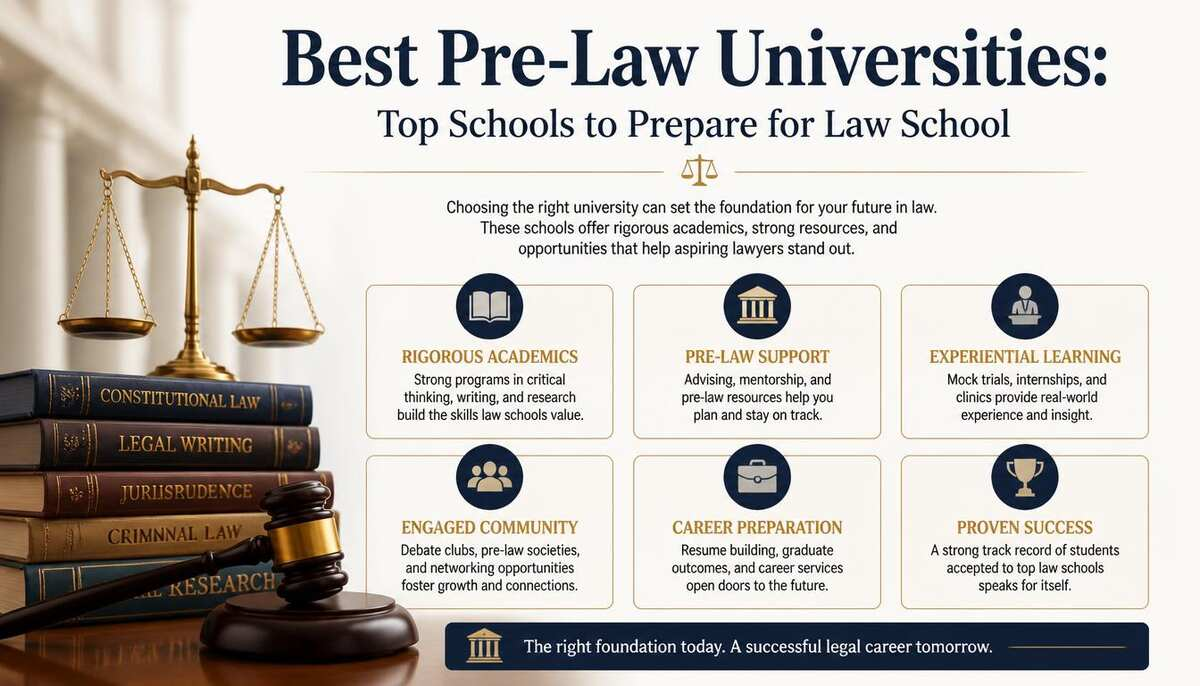
Choosing one of the best pre-law universities is an important first step for students planning to attend law school. While most colleges don’t offer a specific pre-law major, many universities provide excellent academic programs, experienced advisors, internships, and extracurricular opportunities that help students build the skills needed for legal education.
The right university can strengthen your law school application by offering rigorous coursework, debate programs, research opportunities, and guidance for the LSAT and admissions process. This guide highlights what makes a great pre-law university and lists some of the best options to consider.
What Is a Pre-Law University?

A pre-law university isn’t a separate type of college. Instead, it’s a university that offers resources and academic support for students who plan to attend law school after earning a bachelor’s degree. Most students choose majors such as political science, history, economics, English, psychology, or criminal justice while completing pre-law advising.
Many universities also provide mock trial teams, debate clubs, internships, and career counseling to help students develop strong analytical, writing, and communication skills. These experiences can make law school applications more competitive.
What Makes a Great Pre-Law University?

The best pre-law universities offer much more than strong academic programs. They create an environment where students can improve critical thinking, research abilities, and public speaking while preparing for the challenges of law school.
A strong pre-law program should also provide access to experienced advisors who can help students select courses, prepare for the LSAT, build impressive resumes, and navigate the law school application process.
Get the Right Support Before Law School
A good university should offer more than strong classes. Look for pre-law advisors who can help you choose courses, prepare for the LSAT, and understand the law school application process. Debate teams, mock trial programs, internships, and career services can also give you useful experience before law school.
Best Pre-Law Universities to Consider

Several universities have earned excellent reputations for preparing students for law school through outstanding academics and pre-law resources.
Some of the most respected options include:
- Harvard University
- Yale University
- Stanford University
- Princeton University
- Georgetown University
- Columbia University
- University of Chicago
- Duke University
- Northwestern University
- University of Virginia
These universities consistently produce graduates who are accepted into highly ranked law schools.
Best Majors for Pre-Law Students

Contrary to popular belief, there isn’t a required major for future law students. Law schools accept applicants from a wide range of academic backgrounds as long as they demonstrate strong academic performance and analytical skills.
Popular pre-law majors include:
- Political Science
- History
- English
- Philosophy
- Economics
- Criminal Justice
- Psychology
- Sociology
- Business
- Public Policy
Choose a major that matches your interests while helping you develop strong writing and reasoning abilities.
Skills You’ll Develop Before Law School

Success in law school depends on much more than earning good grades. Students should also develop practical skills that improve legal reasoning and communication throughout their undergraduate education.
Important skills include critical thinking, persuasive writing, research, problem-solving, public speaking, and time managemen.
How to Choose the Right Pre-Law University

Every student’s goals are different, so the best university isn’t necessarily the highest-ranked one. Consider factors such as academic programs, tuition costs, financial aid, campus culture, internship opportunities, and access to experienced pre-law advisors.
Visiting campuses, speaking with current students, and reviewing each university’s pre-law resources can help you make a more informed decision before submitting your applications.
Look Beyond the University Ranking
A highly ranked university can be a great choice, but it may not be the right fit for everyone. Compare tuition, financial aid, academic programs, internship opportunities, campus culture, and pre-law support. The best university is one that fits your goals and gives you the resources you need to succeed.
Tips for Future Law School Applicants
Preparing for law school begins long before taking the LSAT. Maintaining a strong GPA, participating in leadership activities, and gaining volunteer or internship experience can significantly improve your future law school application.
It’s also helpful to build relationships with professors who can write strong recommendation letters. Developing consistent study habits and improving your writing skills during college will make the transition to law school much smoother.
Common Mistakes to Avoid
Many students believe they must major in political science to attend law school, but this isn’t true. Law schools welcome applicants from many different academic backgrounds, provided they have strong grades and well-developed analytical skills.
Another common mistake is waiting until senior year to think about law school applications. Planning early allows you to gain valuable experiences, prepare for the LSAT, and build a stronger overall application.
Start Building Your Application Early
You don’t have to wait until your final year of college to think about law school. Start by maintaining a strong GPA, joining meaningful activities, and developing good relationships with professors. Gaining leadership experience and preparing for the LSAT early can also help you build a stronger law school application.
Career Opportunities After Law School
While many graduates become practicing attorneys, others pursue careers in government, business, education, or public service.
Some popular legal careers include:
- Attorney
- Corporate Lawyer
- Criminal Defense Lawyer
- Prosecutor
- Judge
- Legal Consultant
- Policy Analyst
- Compliance Officer
- Legal Researcher
- Government Attorney
A solid undergraduate education provides the foundation for success in each of these fields.
Final Thoughts
Choosing one of the best pre-law universities can provide the academic foundation, guidance, and practical experience needed for success in law school. While prestigious universities offer excellent opportunities, the best choice is one that fits your goals, budget, and learning style.
Focus on maintaining strong grades, developing critical thinking skills, and gaining meaningful leadership and internship experience throughout college. With careful planning and dedication, you’ll be well prepared for the next step toward a successful legal career.
Frequently Asked Questions
What is the best university for pre-law?
Schools such as Harvard, Yale, Stanford, Georgetown, and the University of Chicago are widely recognized for their strong academics and excellent pre-law resources.
Do I need a pre-law major to attend law school?
No. Most universities do not offer a dedicated pre-law major. Students can choose almost any major while completing the courses and activities that prepare them for law school.
Which major is best for future lawyers?
Political science, history, English, philosophy, economics, psychology, and criminal justice are among the most popular choices because they develop strong research, writing, and critical thinking skills.
Does attending a top university improve law school admission?
A well-respected university can strengthen your academic background, but law schools also consider your GPA, LSAT score, leadership experience, recommendation letters, and personal statement.

Andrew Charley is a digital marketer and content writer at NextGen Taleem, focused on creating valuable and easy-to-understand educational content. He specializes in writing about online learning, student resources, and modern digital trends in education. His work aims to help students and learners find practical knowledge, improve skills, and stay updated in a fast-changing digital world.
