


Introduction:
Engineering is the driving force behind technological innovation and practical problem-solving in the modern world. By applying science, technology, and mathematics, engineers create solutions that range from sustainable infrastructure to advanced robotics and aerospace systems. In the United States, engineering careers are in high demand, offering competitive salaries, job stability, and opportunities to make a tangible impact on society.
For aspiring engineers, selecting the right university is a crucial step. Top U.S. engineering schools provide rigorous academics, access to cutting-edge research facilities, and strong industry connections that prepare students for both current and emerging fields. This 2025 guide explores what engineering is, how schools are ranked, top programs, popular majors, research opportunities, admission tips, career paths, and guidance for choosing the ideal engineering school.
What Is Engineering? (Comprehensive Overview of the Field)
Engineering is the art of applying science, technology, and mathematics to solve practical problems. From designing bridges to developing renewable energy systems, engineers drive innovation across industries in the United States. Careers in engineering are in high demand, offering stability, competitive salaries and opportunities to shape the modern world.
The field spans multiple branches, including mechanical, electrical, civil, aerospace, and chemical engineering. Each discipline addresses unique challenges, from creating efficient transportation networks to advancing robotics and aerospace systems.
The combination of creativity, technical skill, and analytical thinking makes engineering an indispensable part of society.
How the Best Engineering Schools Are Ranked
Top U.S. engineering schools are evaluated using rigorous criteria. Academic quality research output, innovative labs, industry partnerships, and graduate outcomes all contribute to rankings.
Universities with strong placement rates, co-op programs, and access to cutting-edge technology often lead national lists of top U.S. engineering schools.
Accreditation, particularly ABET accreditation, ensures programs meet international standards and provide students with recognized credentials. Rankings also consider faculty expertise, research funding, and infrastructure.
For students attending a highly ranked school opens doors to internships, networking opportunities, and career advancement in competitive engineering fields.
Top Engineering Schools in the US (2025 Updated Ranking)
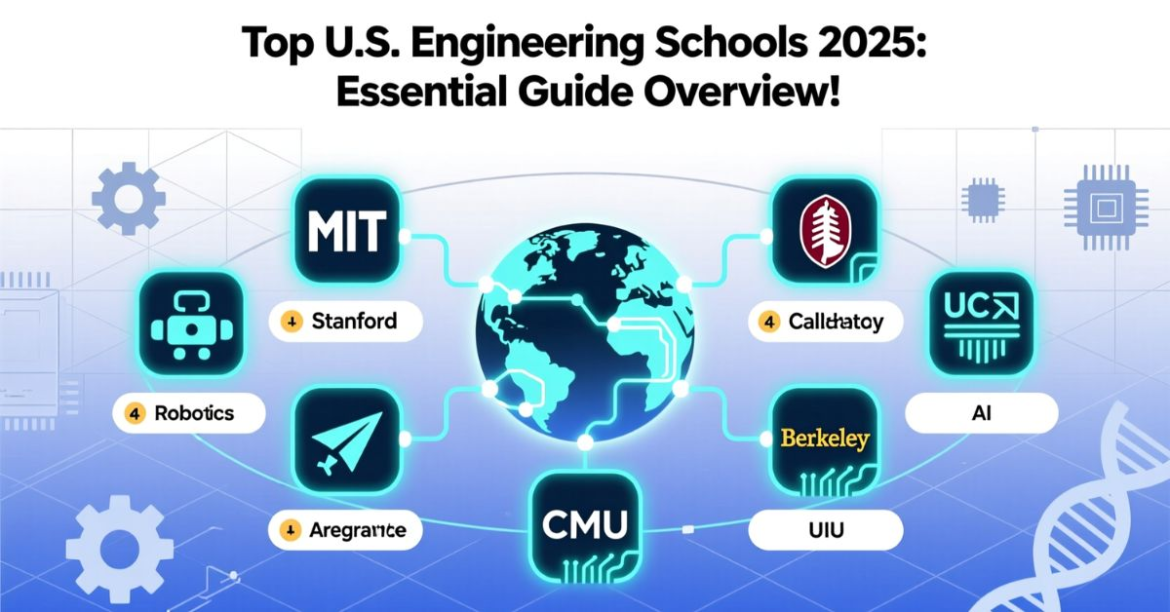
The 2025 rankings of top U.S. engineering schools highlight institutions that combine academic excellence with innovation and career readiness. Leading universities include:
| Rank | University | Specialization Strength | Location | Avg Tuition | Acceptance Rate |
|---|---|---|---|---|---|
| 1 | MIT | Mechanical, Aerospace, AI | Cambridge, MA | $55,000 | 7% |
| 2 | Stanford | Computer, Electrical, Robotics | Stanford, CA | $54,000 | 5% |
| 3 | Caltech | Aerospace, Quantum Engineering | Pasadena, CA | $56,000 | 6% |
| 4 | Georgia Tech | Mechanical, Civil, Systems | Atlanta, GA | $33,000 | 21% |
| 5 | UC Berkeley | EECS, Materials Science | Berkeley, CA | $44,000 | 17% |
| 6 | Carnegie Mellon | AI, Robotics, Computer Eng | Pittsburgh, PA | $54,000 | 15% |
| 7 | Purdue University | Aerospace, Mechanical | West Lafayette, IN | $28,000 | 60% |
| 8 | University of Michigan | Nuclear, Automotive, EE | Ann Arbor, MI | $53,000 | 23% |
Specialty-based rankings include the best schools for mechanical, electrical, aerospace systems, and quantum engineering, guiding students focused on specific fields.
Popular Engineering Majors You Can Study
Mechanical Engineering
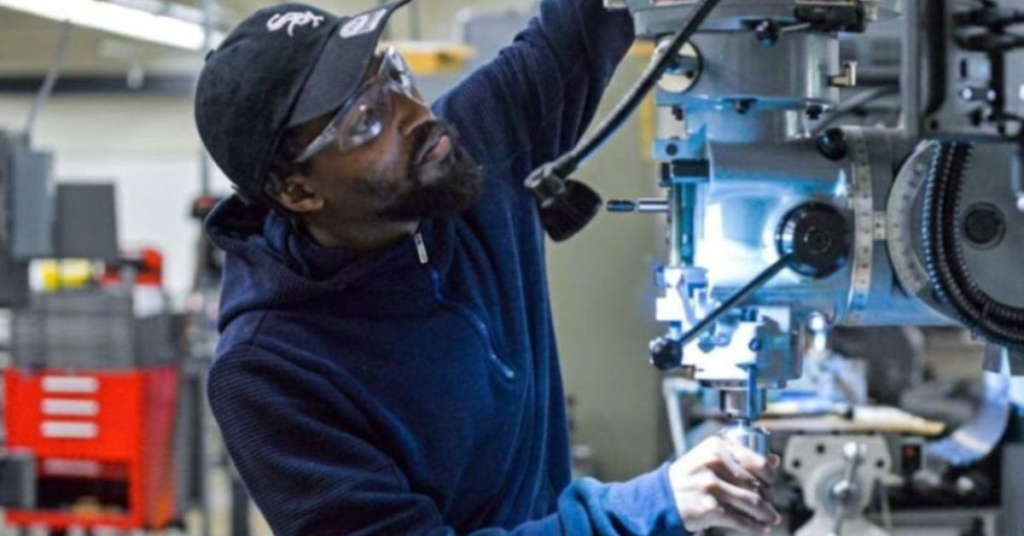
Mechanical Engineering has long been regarded as one of the most established and versatile fields of engineering. Even when global economies faced recessions and industries struggled, opportunities for mechanical engineers remained remarkably steady. Yet students today often hesitate when selecting their career path because modern education offers so many attractive options.
At the Indore Institute of Science & Technology, we want to reassure students that Mechanical Engineering is a timeless and future-proof profession. The demand for mechanical engineers is steadily rising, and the field continues to evolve with technology. However, anyone considering this discipline should first understand what it truly involves and how it can open the door to countless career possibilities.
At its core, Mechanical Engineering focuses on the creation and improvement of mechanical systems across a wide range of industries. The field blends physics, mathematics, and engineering principles to design machines and mechanisms that make life and industry function smoothly.
With such a solid foundation, mechanical engineers find opportunities in sectors such as automobiles, aerospace, space exploration, biomechanics, energy, oil and gas, and even agriculture. Over the years, the discipline has expanded beyond traditional boundaries and has now become deeply interdisciplinary, integrating with fields like electronics, computing, materials science, and biotechnology.
What Do Mechanical Engineers Actually Do?
Mechanical engineers contribute to the design, development, and functioning of nearly every type of machine or mechanical system we rely on today. Their work is broad and dynamic—ranging from conceptualizing and testing new products to overseeing manufacturing processes, installation, and long-term maintenance of industrial machinery.
Their responsibilities often require applying knowledge from areas such as mechanics, thermodynamics, robotics, structural analysis, fluid dynamics, and kinematics. These concepts help engineers design manufacturing plants, engines, power generation systems, HVAC units, and both simple and highly complex machinery.
Beyond conventional areas, mechanical engineers are increasingly entering cutting-edge domains like nanotechnology, biomedical engineering, and advanced composite materials, which are expanding the scope and influence of this field even further.
Career Prospects
Mechanical Engineering remains one of the most secure and opportunity-rich professions. Even during economic downturns, the demand for mechanical engineers typically holds strong compared with many other fields. Today, as industries upgrade and new technologies emerge, the need for skilled mechanical engineers is growing faster than ever.
Graduates aren’t limited to traditional manufacturing or industrial roles; they can explore opportunities in research, automation, renewable energy, aerospace, robotics, consulting, and even management. Both government and private sectors offer excellent career paths, and one’s growth largely depends on technical skills, hands-on experience, and specialization.
Mechanical Engineering is an ideal choice for students seeking a stable yet exciting career with long-term growth. Industries across the world require competent mechanical engineers who possess practical knowledge, strong fundamentals, and the ability to work with modern technology.
At Indore Institute of Science and Technology recognized among the notable engineering colleges in MP, we emphasize quality education and holistic development. Our bachelor’s and master’s programs in Mechanical Engineering are designed to prepare students for emerging technological challenges.
Through industry-oriented training, specialized courses, and collaborations with leading academic partners, we ensure our students graduate as skilled professionals ready to meet the demands of the modern engineering world.
Electrical Engineering

Electrical Engineering is one of the most important and foundational branches of engineering, often referred to as the “mother branch” because many other engineering disciplines have evolved as its specializations.
This field focuses on understanding the principles, design, and analysis of systems and devices used for generating, transmitting, distributing, and utilizing electrical energy. It also includes the study of electronic circuits and devices used for measurement, instrumentation, protection, and control of electrical systems. Modern Electrical Engineering courses incorporate computer-based tools and applications for system design, quality assurance, security, and efficient operation of power networks.
During a B.Tech program, students develop strong analytical and problem-solving skills, programming knowledge, and familiarity with computer systems. These competencies not only prepare them for traditional electrical engineering roles but also open opportunities in software and information technology fields. With some additional training, electrical engineering graduates can work in emerging and futuristic technologies.
Graduates typically find employment in electricity boards, utility companies, and both small and large-scale industries as engineers or technical managers. They are responsible for installing, operating, and maintaining electrical systems and equipment.
Companies producing large electrical machines and devices also hire electrical engineers for design, production, testing, and quality control. Thanks to the wide range of roles available, electrical engineers enjoy diverse career options.
Career Opportunities in Electrical Engineering
Electrical engineers can pursue careers in areas such as:
- Power generation and distribution (electric power stations)
- Residential and commercial wiring and lighting
- Designing household appliances
- Electrically-controlled industrial machinery
- Robotics and design software development
- Electric vehicle (EV) design and systems
- Industrial process automation and control
- SCADA systems and automation solutions
- Solar, wind, and other renewable energy installations
Additionally, electrical engineers are sought after in industries like food processing, chemical manufacturing, pulp and paper, automotive, and aerospace. Academic and research institutions also recruit electrical engineers as faculty members or scientists.
The field is evolving rapidly with new technologies, offering opportunities in areas like Artificial Intelligence (AI), Machine Learning (ML), Data Science (DS), IoT (Internet of Things), microcontrollers (Arduino, Raspberry Pi), and electric vehicles.
Given its wide-ranging applications and future growth potential, Electrical Engineering remains one of the most promising and versatile engineering disciplines.
What is Civil and Environmental Engineering?
Think for a moment about some of the biggest challenges humanity will face in your lifetime. What comes to mind? Water shortages? Food security? Energy production? Climate change? Hurricanes and other extreme weather events? These are exactly the kinds of complex problems that graduates of Civil and Environmental Engineering (CEE) work to address.
The National Academy of Engineering has identified 14 “Grand Challenges” for engineers in the 21st century. Civil and environmental engineers play a crucial role in solving many of these challenges, such as:
- Restoring and improving urban infrastructure
- Providing access to clean water
- Managing the nitrogen cycle
- Developing methods for carbon capture and storage
- Creating tools to advance scientific discovery
- Making solar energy affordable and practical
If you’re thinking about the kinds of problems you want to solve in your career, exploring CEE could provide many opportunities to make a real impact. For more information on the types of careers CEE graduates pursue, check out dedicated career resources where alumni share their professional journeys.
Civil vs. Environmental Engineering
Civil Engineering covers a variety of areas, including:
- Structural engineering (designing buildings, bridges, and other structures)
- Geotechnical engineering (working with soil and foundations)
- Construction engineering (managing large-scale projects)
- Transportation engineering (planning and maintaining roads, highways, and transit systems)
Environmental Engineering, on the other hand, focuses on:
- Water quality management
- Renewable and green energy solutions
- Air quality improvement
- Remediation of contaminated sites
Some overlap exists between these disciplines. For example, both fields may address water resource management, natural disaster mitigation, and climate change adaptation.
Innovative Education and Research
At the University of Connecticut’s School of Civil and Environmental Engineering (UConn SoCEE), research and teaching also explore other key challenges, including:
- Personalized Learning: Creating tailored educational experiences that enhance student learning outcomes
- Virtual and Augmented Reality (VR/AR): Using immersive technologies to transform engineering education and give students hands-on, realistic learning experiences
If you’re curious about how these advanced technologies integrate with civil and environmental engineering, visiting the campus or speaking with faculty and students is a great way to get firsthand insight.
Civil and Environmental Engineering is more than designing buildings or cleaning water—it’s about creating solutions to some of the world’s most pressing problems while preparing students for careers that truly make a difference.
Materials Science
Materials Science and Engineering is a field full of creativity and possibilities. It brings together people who are passionate about developing advanced materials, whether metals, ceramics, polymers, composites, nanomaterials, or biologically inspired systems, and using them to create technologies that genuinely improve our world.
The work of materials scientists and engineers influences nearly every part of modern life: protecting the environment, supporting better health, raising our quality of life, increasing the efficiency of essential resources, strengthening national security, and driving economic growth.
Professionals in this field play a role in almost every technology you can imagine. They help design materials for microchips, medical implants, transportation systems, clean water technologies, and renewable energy devices.
They are also at the forefront of building sustainable manufacturing processes and recyclable products. Today, as society focuses more on sustainability and environmental responsibility, the importance of developing smarter, cleaner, and more durable materials has never been greater.
Because technology is evolving so quickly, there is a growing need for experts who can create innovative materials and environmentally conscious solutions. This demand opens the door to exciting and diverse career paths in industries such as aerospace, transportation, defense, construction, mining, electronics, energy, and biomedical engineering.
Skills and Expertise
Across our undergraduate and postgraduate programs, our main goal is to develop graduates who are not only technically capable but fully prepared for the realities of professional engineering and scientific practice. We aim to equip students with a strong foundation in technical knowledge along with the essential skills that define effective professionals.
These include the ability to think critically, investigate problems independently, stay motivated, and approach challenges with creativity and confidence. We also place a strong emphasis on communication, teamwork, leadership, and management skills.
Just as importantly, we encourage our graduates to be lifelong learners who understand the broader impact of their work economically, environmentally, and socially, and who carry a sense of responsibility as both professionals and global citizens.
Career Opportunities
Earning a UNSW degree in Materials Science and Engineering opens the door to an incredibly wide range of career paths. If you’re driven by sustainability and environmental responsibility, you might find yourself working on renewable energy systems, advanced recycling methods, sustainable manufacturing, or cutting-edge additive technologies directly contributing to a cleaner, greener future.
Your skills can also take you into industries that rely on constant innovation, such as construction, automotive design, and aerospace engineering, where new materials are essential for better performance and safety. For those curious about investigative work, materials expertise is also invaluable in forensic science, where understanding how materials behave can help solve complex cases.
Beyond that, there are exciting opportunities in fields like nanotechnology, electronics, and healthcare. You could help shrink the size of modern devices, advance next-generation electronic components, or play a part in creating medical technologies that transform lives.
Nuclear Engineering
This discipline covers reactor design, nuclear safety, and radiation applications, preparing students for energy and defense careers.
Systems Engineering
Systems engineering integrates complex systems design, optimization, and operations, critical for aerospace, defense, and logistics sectors.
Quantum Engineering
Quantum engineering prepares students for cutting-edge research in quantum computing and quantum materials, a rapidly emerging field.
Additive Manufacturing
Students focus on 3D printing and rapid prototyping, designing and producing components for multiple industries.
Space Resources Engineering
This specialty trains engineers to explore, mine, and utilize extraterrestrial resources, supporting NASA and commercial space initiatives.
Engineering Research & Innovation Opportunities
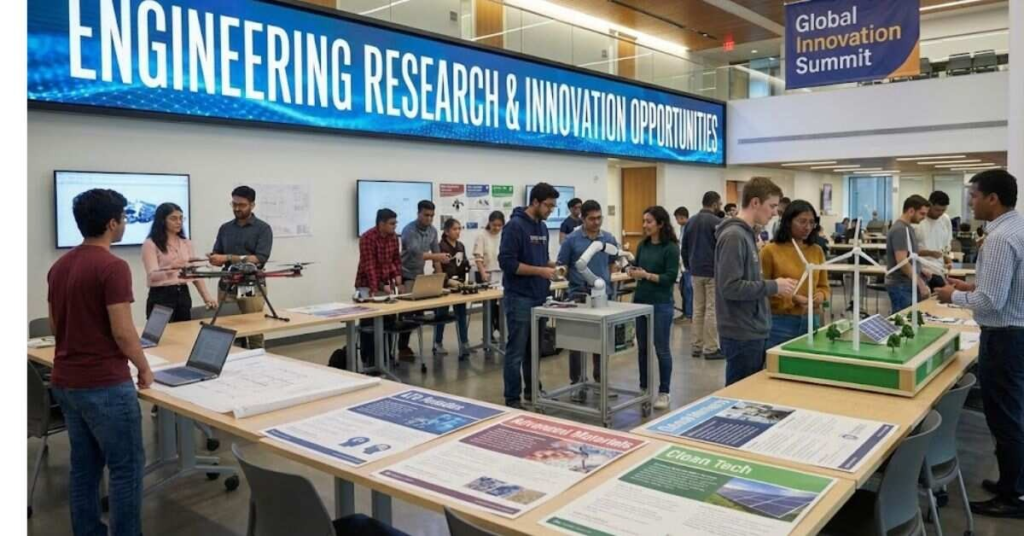
Top engineering schools in the U.S. provide access to state-of-the-art labs, innovation centers, and research programs. Undergraduate students can participate in hands-on projects, from additive manufacturing prototypes to quantum computing experiments.
Research opportunities improve career prospects by providing real-world experience, networking connections, and early specialization. Collaboration with industry leaders and exposure to cutting-edge technologies allow students to contribute to innovation and strengthen their resumes for graduate programs and high-paying jobs.
Admission & Financial Aid for Engineering Programs
Admission to top U.S. engineering schools is competitive. Students typically need a strong GPA, SAT/ACT scores, and science/math prerequisites. Portfolios or research projects can enhance applications for specialized programs.
Financial aid options include merit-based scholarships, need-based grants, and work-study programs. International students must meet additional requirements such as TOEFL/IELTS scores and visa documentation. Strategic planning ensures access to affordable and high-quality education at leading engineering universities.
Career Paths & Job Opportunities in Engineering
Graduates from top U.S. engineering schools can pursue careers as mechanical, electrical, aerospace, civil, or systems engineers. Emerging fields include AI engineering, renewable energy, and space technology.
Salaries are highly competitive, and the U.S. job market continues to grow due to technological innovation and infrastructure development. Engineers can also transition into research, consulting, or entrepreneurial ventures, making this field versatile and rewarding.
How to Choose the Right Engineering School (Expert Guide)
Choosing the right engineering school depends on program focus, research opportunities, campus life, and tuition value. Accreditation ensures program quality, while alignment with career goals and industry connections enhances prospects.
Students should evaluate online vs on-campus options, scholarships, and location. Visiting campuses, talking to alumni, and reviewing specialized labs helps make an informed decision that maximizes both educational experience and career opportunities.
Conclusion
Selecting the ideal engineering school is a crucial step for students aiming to build a successful career in engineering. The top U.S. engineering schools not only provide world-class education but also offer access to cutting-edge research, industry connections, and opportunities to work on ground breaking projects.
By understanding school rankings, exploring popular majors, and taking advantage of innovation and research opportunities, students can position themselves for successful and rewarding careers in diverse engineering fields.
With the right combination of education, experience, and planning, future engineers can turn their passion for problem-solving into a career that shapes the future of technology, infrastructure, and society. The journey may be challenging, but the rewards both personal and professional are limitless.
Frequently Asked Questions (FAQs)
Q1: What is the best engineering school in the U.S.?
A: The best school depends on your field of interest. MIT, Stanford, and Caltech consistently rank at the top due to their strong programs in mechanical, aerospace, AI, robotics, and quantum engineering. Specialty programs, like aerospace at Purdue or systems engineering at Georgia Tech, may also be ideal depending on your career goals.
Q2: How are engineering schools ranked?
A: Engineering schools are ranked based on academic quality, research output, faculty expertise, industry connections, labs and facilities, graduate outcomes, and accreditation (especially ABET). Rankings also consider tuition value, placement rates, and opportunities for hands-on experience.
Q3: Which engineering majors can I study?
A: Popular engineering majors include Mechanical, Electrical, Civil, Aerospace, Nuclear, Systems, Materials Science, Quantum Engineering, Additive Manufacturing, and Space Resources Engineering. Your choice should align with your career interests and the school’s specialization strengths.
Q4: Is it hard to get into top engineering schools?
A: Yes. Admission is highly competitive and typically requires a strong GPA, SAT/ACT scores, rigorous coursework in science and math, and sometimes portfolios or research experience. International students also need TOEFL/IELTS scores and visa documentation.
Q5: Are engineering degrees worth the cost?
A: Absolutely. Engineering graduates enjoy high starting salaries, strong job growth, and versatile career opportunities in industries like AI, aerospace, renewable energy, and defense. Top schools also provide access to research, internships, and industry networks that enhance career prospects.
